
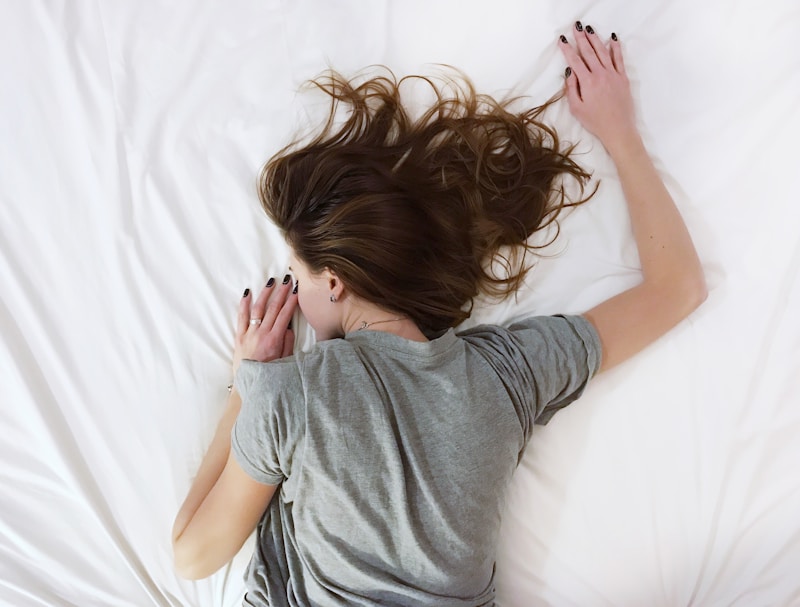
A Cycle That Feeds Itself
Autistic burnout is often described as a state of complete depletion: exhaustion that does not lift with rest, a shrinking ability to cope with everyday demands, and a loss of skills that used to come easily. What gets discussed far less often is how much of that cycle runs through sleep. Insomnia, sensory overload, and a circadian rhythm that refuses to line up with the rest of the world do not just accompany autistic burnout. For many autistic adults, they are a large part of what drives it, and what keeps it going once it starts.
Understanding the mechanics of this cycle will not undo it by itself, but it can make it easier to recognise what is happening and where it is genuinely worth intervening, rather than treating every symptom as one undifferentiated wall of exhaustion.
Insomnia: Not Just "Bad Sleep"
Difficulty falling asleep, difficulty staying asleep, waking too early, and sleep that does not feel restorative even when there is enough of it: these are the core features of insomnia, and they are reported at markedly higher rates in autistic adults than in the general population. A widely used clinical measure, the Insomnia Severity Index (ISI), captures exactly this combination of difficulty, dissatisfaction, and daytime impact in a short self-report questionnaire (Bastien et al., 2001), and is a useful way to put a number on something that otherwise gets described only as "I just don't sleep well."
Insomnia in autism is rarely a single, isolated symptom. It interacts with, and is often driven by, two other factors that are much more specific to autistic experience: sensory sensitivity and a genuinely different circadian rhythm.
Sensory Overload: The Body Doesn't Switch Off on Cue
Falling asleep requires the nervous system to downshift: less input, less vigilance, less to process. For many autistic people, that downshift is harder to achieve. Heightened sensitivity to light, sound, texture, and temperature does not simply disappear at bedtime. A too-warm duvet, the hum of a fridge two rooms away, the seam in a pair of pyjamas: any of these can be enough to keep the nervous system in a state of low-grade alert exactly when it needs to be doing the opposite.
Crucially, this is cumulative. A day spent masking in a noisy office, managing unpredictable sensory input, and suppressing self-regulating behaviours like stimming leaves the nervous system with a larger deficit to recover from at night, at precisely the moment sleep becomes harder to access. The exhaustion does not average out; it compounds.
Circadian Delay: A Body Clock Running on a Different Schedule
On top of insomnia and sensory load, many autistic people, particularly in adolescence and young adulthood, experience a genuine delay in their circadian rhythm: their body's internal clock is shifted later than the conventional day requires. A large population study of high-school-aged teenagers found a substantial proportion showing this delayed sleep phase pattern, closely overlapping with insomnia symptoms and linked to real-world consequences such as difficulty attending school on time (Saxvig et al., 2012). For someone whose body is not biologically ready for sleep until the early hours, but whose job, family, or college schedule demands they be up at seven, the result is chronic, structural sleep restriction that no amount of "better sleep hygiene" advice fully resolves.
How the Cycle Closes
- Poor sleep reduces the capacity to mask and to self-regulate, making the next day's sensory and social demands feel more overwhelming than they would on a well-rested day.
- A harder day increases the nervous system's overall load, making it even more difficult to wind down at the following bedtime.
- A circadian rhythm that is out of step with daily obligations means the "wind down" window and the body's actual readiness for sleep may not overlap at all, regardless of effort.
- Over weeks or months, this compounding deficit is what autistic burnout often looks like from the inside: not one bad week, but a slow, sleep-driven erosion of coping capacity.
Why This Is Worth Naming Specifically
Sleep problems in autistic adults are frequently treated as background noise: something to mention in passing rather than a focus of assessment in their own right. Naming insomnia, sensory-driven sleep disruption, and circadian delay as distinct, assessable features changes that. It means a clinician looking at burnout can ask more precise questions than "how are you sleeping", and a person experiencing burnout has language for what is actually happening to them, rather than only a vague sense of being permanently exhausted.
This article is provided for general information and awareness. It does not diagnose autistic burnout, insomnia, or any sleep disorder, and it is not a substitute for assessment by a qualified clinician. If sleep, sensory overwhelm, or burnout are significantly affecting your life, a clinician can help you understand what is contributing to it and what support is available.
NeuroCheck Pro does not currently offer a dedicated sleep assessment covering insomnia severity and circadian patterns. Our free Explore screening tools are a starting point for anyone wanting an initial look at autistic and ADHD traits before deciding on next steps, and a clinician can assess sleep directly as part of a consultation.
Start with NeuroCheck Pro's free Explore screening tools →
Sources and references
- Bastien CH, Vallières A, Morin CM. Validation of the Insomnia Severity Index as an outcome measure for insomnia research. Sleep Medicine. 2001;2(4):297-307.
- Saxvig IW, Pallesen S, Wilhelmsen-Langeland A, Molde H, Bjorvatn B. Prevalence and correlates of delayed sleep phase in high school students. Sleep Medicine. 2012;13(2):193-199.