
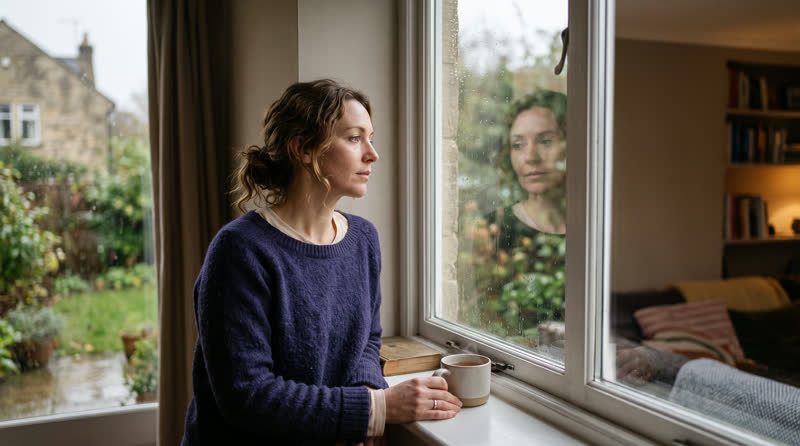
For a lot of women, ADHD does not look like a boy bouncing off the walls in a classroom. It looks like a colour-coded planner that is never quite followed, a string of late nights catching up on things that should have been easy, and a quiet, exhausting sense of performing “normal” for everyone else’s benefit. Many women reach their thirties or forties before anyone, including themselves, considers that ADHD might be part of the picture.
This piece looks at what “masking” actually means, why it is thought to be so common among women and girls with ADHD, the toll it can take over time, and what steps might help someone start to understand their own experience better. None of this is a diagnosis. It is a starting point for reflection, ideally one you can bring to a GP or specialist if it resonates.
Key takeaways
- Masking is the effort some people put into hiding or covering up ADHD traits so they appear more “typical” at work, at school or socially.
- Research and clinical observation suggest masking may be one reason ADHD in women and girls is often missed or diagnosed later in life.
- Masking can be exhausting to sustain and some people describe it contributing to burnout, anxiety or low mood over time.
- Noticing patterns of masking in yourself does not confirm ADHD; only a full clinical assessment can do that.
- Reflection tools, journalling, or talking to a GP are reasonable first steps if this topic feels personally relevant.
What is ADHD masking?
Masking generally refers to the conscious or semi-conscious effort to hide traits that might otherwise be visible, such as difficulty concentrating, restlessness, forgetfulness or impulsivity. Someone who masks might rehearse conversations in advance, over-prepare for meetings, mirror the behaviour of people around them, or push through exhaustion rather than let anyone see them struggle.
The concept is discussed more widely in autism research, but clinicians and researchers increasingly describe similar patterns in ADHD, particularly among women and girls. It is worth saying clearly that masking is not lying or manipulation. It is often described as a survival strategy that develops gradually, frequently without the person fully realising they are doing it, in response to social expectations or previous experiences of being criticised or misunderstood.
Why women and girls may mask more often
There is no single confirmed explanation, but a few factors are commonly discussed in the literature and by clinicians working in this area.
Girls are sometimes socialised from an early age to be accommodating, tidy and quiet, which may make internal restlessness or distraction easier to hide behind good behaviour. ADHD in girls is also thought to present more often with inattentive traits, such as daydreaming or difficulty sustaining focus, rather than the more visible hyperactivity historically associated with the condition in boys. This may mean fewer red flags are raised by teachers or parents. Some researchers have also suggested that diagnostic criteria and assessment tools were originally developed and tested using largely male samples, which may make them less sensitive to how ADHD tends to present in women.
Together, these factors are thought to contribute to women and girls being diagnosed later, if at all, and to arriving at an assessment already having spent years compensating.
The everyday cost of masking
Masking can take many forms and the effort involved is not always obvious from the outside, which is part of what makes it hard to spot.
- Do you find yourself rewriting an email five or six times to make sure it reads as competent and organised?
- Do you overcommit to routines, alarms and lists, then feel a disproportionate sense of failure when one slips?
- Do you stay unusually quiet in meetings to avoid saying something “out of order” or interrupting?
- Do you feel relief at getting home and being able to “switch off” the performance, sometimes followed by a crash in energy or mood?
- Do you avoid social situations that feel too unpredictable to manage while masking?
None of these questions on their own point to ADHD, and this list is not a diagnosis; only a full clinical assessment can confirm one. Most people relate to at least some of them some of the time. What some clinicians describe as more relevant is the pattern: whether this kind of effortful self-management feels constant, disproportionate to the task, and quietly draining in a way that has been going on for years rather than weeks.
Masking and misdiagnosis
Because masking can make someone appear organised and capable on the surface, it is thought to be one reason ADHD in women is sometimes missed, or first picked up as anxiety, depression or stress rather than as ADHD itself. This does not mean those other diagnoses are wrong, since they can genuinely coexist with ADHD, but it may mean the underlying picture is incomplete.
Some women describe years of being treated for low mood or anxiety without those treatments fully addressing the difficulties they were having with focus, time management or overwhelm. If that sounds familiar, it may be worth mentioning ADHD specifically when you next speak to a GP, rather than assuming it has already been ruled out.
How masking affects relationships and mental health
Sustaining a mask over long periods is widely described as tiring. Some people describe a cycle where they hold everything together in public, then experience what is sometimes called “ADHD burnout” or shutdown once they are alone or somewhere they feel safe.
Close relationships can also be affected. Partners, friends or family may only see the “held together” version of someone and struggle to understand why they seem to need so much recovery time, or why small setbacks feel so heavy. Some people find that naming what is happening, even informally, helps the people around them understand the pattern rather than reading it as unreliability or a lack of effort.
If low mood, anxiety or persistent exhaustion are part of your experience, it is worth raising these directly with a GP as well as any thoughts about ADHD, since your wellbeing in the round matters more than any single label.
Steps that some people find helpful
There is no single approach that works for everyone, and what helps varies a great deal from person to person. A few things some people and families say they have found useful to try include:
- Keeping a simple diary of energy, focus and mood for a couple of weeks, to look for patterns rather than isolated bad days.
- Building in deliberate recovery time after socially or mentally demanding periods, rather than immediately moving on to the next task.
- Being open with at least one trusted person about the effort masking takes, so there is somewhere the performance can drop.
- Looking at practical routines and environment (noise, lighting, notifications) rather than assuming any struggle is purely a willpower issue.
These are offered as options to consider rather than instructions, and none of them are a substitute for professional support if things feel unmanageable.
When to consider a professional assessment
If patterns like these have been present for a long time, show up across different areas of life (work, home, relationships), and are causing real difficulty or distress, it may be worth requesting an ADHD assessment through your GP. In England, you may also be able to use the NHS Right to Choose route to select a provider, though availability and waiting times vary by area and this is worth checking locally. A formal assessment, usually carried out by a psychiatrist or specialist clinician, is the only way to reach a diagnosis. Self-reflection, however useful, cannot replace it.
Thinking about whether any of this resonates with your own life is a reasonable first step. NeuroCheck Pro’s free screener is designed as exactly that: a short, informational reflection tool that summarises your answers into something you can bring to a GP or specialist conversation. It is not a diagnostic test and it cannot confirm or rule out ADHD on its own, but for many people it is a useful, low-pressure way to organise their thoughts before that conversation.
Frequently asked questions
Is masking the same thing as just being organised or a perfectionist? Not necessarily. Being organised is a skill, whereas masking is usually described as an effortful, often exhausting attempt to hide underlying difficulties. The distinction some clinicians point to is how draining it feels and whether it is sustainable long term, rather than the behaviour itself.
Can men and boys mask ADHD too? Yes, masking is not exclusive to women, though it is discussed particularly often in relation to women and girls because it may partly explain why their ADHD tends to be recognised later. Anyone can develop coping strategies that hide their traits from others, regardless of gender.
Does masking mean my ADHD is not “severe”? No. Masking is a coping response, not a measure of how significant someone’s underlying traits are. Some people who mask very effectively at work or school are experiencing considerable internal strain that is not visible to others.
Should I try to stop masking altogether? That is a personal decision and there is no single right answer. Some people find that gradually being more open in certain situations helps reduce the pressure they feel, while others prefer to keep some level of masking in specific settings such as work. It is worth thinking about what feels sustainable and safe for you.
How long does an NHS ADHD assessment usually take? Waiting times vary considerably by area and have been a widely reported issue in recent years, sometimes running to many months or longer. Your GP or the NHS Right to Choose pathway can give you the most accurate picture for where you live.
Will using the NeuroCheck Pro screener tell me if I have ADHD? No, the screener is an informational reflection tool, not a diagnostic instrument. It is designed to help you organise your thoughts and can produce a summary to take to a GP or specialist, but only a full clinical assessment can determine a diagnosis.
Sources and references
- National Institute for Health and Care Excellence (NICE). Attention deficit hyperactivity disorder: diagnosis and management (NG87).
- NHS. Attention deficit hyperactivity disorder (ADHD) overview.
- American Psychiatric Association (2022). Diagnostic and Statistical Manual of Mental Disorders, Fifth Edition, Text Revision (DSM-5-TR).
- ADHD UK (2023). ADHD in women and girls.
- ADHD Foundation (2023). Understanding ADHD across the lifespan.
- Royal College of Psychiatrists (2023). ADHD in adults.
- NHS England (2023). Right to Choose guidance.
- Mind (2023). ADHD and mental health.
Disclaimer
This article is company-authored informational content produced by NeuroCheck Pro to help readers understand this topic in general terms. It is not a medical diagnosis and is not a substitute for assessment by a qualified clinician. If you are concerned about your own or someone else’s health, please speak to your GP or contact NHS 111 for advice. If you or someone you know is struggling or in distress, the Samaritans are available free, any time, on 116 123.