
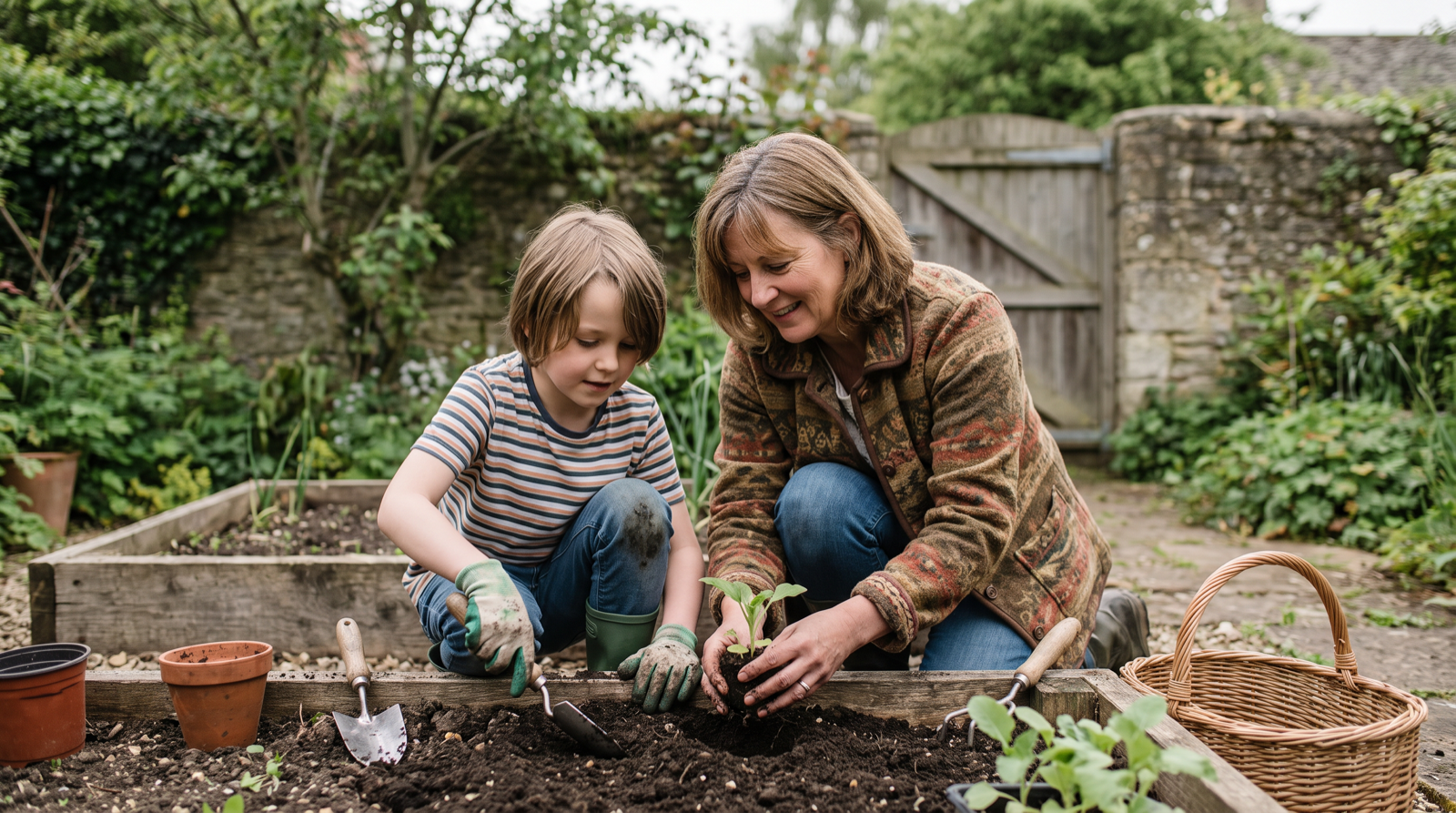
Summer can be restful and enjoyable. A little planning gets you there without losing the looseness the season is for.
UK families with neurodivergent children often find summer harder than they expected. The looseness is part of the point, but it can also be the source of regulation challenges, sleep drift, social pressure, and the much-mentioned "summer slide" that hits the autumn term. This guide draws on publicly available NHS, National Autistic Society, and SENDIASS resources (see Sources) and is for general information only; it has not been clinically reviewed. There's no guarantee of a perfect summer, but many families find these approaches help make things feel more manageable.
Key takeaways
- Summer routines need three or four predictable anchor points a day, not a full term-time timetable.
- Hold the wake-up time steady even if bedtime drifts; it makes the return to school easier.
- Many parents and sources describe heat as adding to a child's overall sensory load, worth planning outdoor time for cooler parts of the day.
- One social event a week, with a plan and an exit route, beats a packed social calendar.
- Starting to rebuild structure two weeks before term begins softens the shock of September.
Maintaining routines during breaks
Term-time routines are scaffolding. They tell your child what is happening now, what is happening next, and who will be there. Summer drops the scaffolding all at once. The result is rarely that your child relaxes. It is usually that your child becomes less regulated, less rested, and harder to live with, because the system is doing less work and your child is doing more.
A summer routine does not have to look like a term-time routine. It needs three or four predictable anchor points across the day, in roughly the same order, every day of the week. Waking, a morning activity, lunch, an afternoon activity, dinner, and wind-down is enough. The anchors do not need exact times. They need to appear in the same order.
A practical approach many families use is a visual chart on the kitchen wall, with pictures or Velcro-backed cards your child moves as each anchor passes. For older children, a shared calendar on a tablet or a wall whiteboard works just as well. The point is that the structure is visible and owned by the family, not enforced by an adult.
Sleep is part of the routine. Summer tends to drift sleep later, and the first week of the autumn term tends to hurt. Hold the wake-up time closer than the bedtime if you have to choose. Many families find it easier to hold a stable wake time than a stable bedtime, and it can make the return to school smoother.
Build in two protected rest moments a day: a quiet hour after lunch and the wind-down before sleep. Both are non-negotiable, especially on activity-heavy days.
Managing sensory challenges in summer heat
UK summers are getting hotter and more variable. Many parents and sources describe heat as adding to a child's overall sensory load, worth planning outdoor time for cooler parts of the day. Overheating, sweat on skin, itchy clothing tags, sun in eyes, and the strange sounds of fans and air conditioning units all add up. A child who copes well in May may struggle in July, even at the same activity.
Practical steps that help:
- Clothing matters. Light, loose, breathable layers in natural fibres. Keep spare sets in the day bag. A wet cloth in a zip bag in a cool bag gives a fast reset for face, neck, and hands.
- Staying hydrated can help some children feel more settled, as well as supporting general health. A water bottle with a straw and a marked time on it makes drinking easier to remember. Electrolyte sachets, sold cheaply in UK supermarkets, are useful on really hot days.
- Many UK families with sensory-sensitive children report that shade and cool surfaces feel more comfortable than air conditioning, pop-up tents, parasols, cooling towels, and a damp cloth on the neck are commonly used options worth trying. Some parents find a pet cooling mat, sold for dogs, a useful low-cost option to try.
- Plan outside time for morning or late afternoon. Midday UK summer sun is the wrong time for the park and the right time for an indoor activity, a library visit, or a soft-play morning before it gets busy.
- Some parents notice their child becomes more sensitive to sound, clothing, or food in hot weather, it may be worth checking whether heat is a factor, alongside other possible causes.
- Sunglasses and hats are not optional. A wide-brim hat and UV-protective sunglasses reduce sensory input on top of sun protection. Keep a spare pair in the day bag.
If your child has additional sensory needs around food, summer often makes this harder. Do not push new foods in the heat. Stick with what works.
Social opportunities without pressure
Many neurodivergent children find the social demands of summer harder than the unstructured time. Birthday parties, long family visits, holiday clubs with unknown children, and unstructured park time with classmates are all activities that adults read as social fun and that neurodivergent children often experience as taxing.
The answer is not to remove all social opportunities. It is to choose them carefully and to give your child a strategy for the ones you keep.
Some UK approaches that work:
- One social event a week at most. More than that, and the regulation cost compounds across the week.
- Pre-warn your child. A short social story or a verbal run-through ("at Sam's party there will be about ten children, two adults, the garden, cake at 3pm, home by 5pm") gives your child the predictability they need to prepare, rather than being caught out by a change of plan on the day. Where you can, a photo of the house or garden beforehand helps even more.
- Agree an exit plan before you arrive, not once your child is already struggling. A simple signal, a word, or a hand on the shoulder that means "we are leaving in ten minutes" lets your child keep some control over the ending.
- Scope out a quiet spot in advance, whether that is a car, a spare room, or a corner of the garden, so your child knows there is somewhere to retreat to if the noise or the crowd becomes too much.
Preparing for autumn transitions
The shift back into term time is often the hardest transition of the year, and it goes more smoothly when it starts well before the first day back. Two weeks before the end of the holidays is a good point to begin reintroducing structure: shift bedtimes and wake times gradually towards the school routine, bring back a version of the morning sequence your child will need in September, and reduce the number of unplanned, high-stimulation days.
If it is possible, visiting the new classroom or meeting the new teacher over the summer makes a real difference. Many UK schools will arrange a quiet visit outside term time if you ask, particularly for a child moving up a year group or into a new setting. Even a short look at the room, the peg with their name on it, and the walk from the school gate to the classroom door gives your child a mental map to hold onto on the first morning.
Talking through the change matters as much as the practical preparation. Keep it concrete and honest: what will be the same, what will be different, and what to do if something feels hard. A simple countdown calendar, a social story about the first day, or a photo of the new teacher can all help. Try to have this conversation more than once, in short, low-pressure moments, rather than as a single big talk.
Self-care for parents
Supporting a neurodivergent child through the school holidays is real work, and it is easy to reach September running on empty. Looking after yourself is not a luxury on top of the job. It is part of what keeps the household regulated, because children pick up on parental stress quickly, and a depleted parent has less patience for the planning this guide describes.
Small, realistic steps count for more than grand plans. A short walk while a partner or grandparent covers an hour, a holiday club or short break scheme for a few sessions a week, or simply protecting fifteen minutes with a cup of tea and no interruptions all add up over six weeks. Many local authorities and charities run short breaks or holiday activity schemes for children with additional needs, sometimes free or subsidised through the Family Fund or local SEND services, and it is worth asking your local authority's SEND team what is available in your area.
It also helps to lower the bar for what a good summer looks like. A calmer week with fewer meltdowns is a success, even if it did not include the days out you had planned. If you have a partner, splitting the load explicitly, so each of you gets a real block of time off, tends to work better than assuming it will happen naturally. And if you are managing this alone, it is worth asking family, friends, or your GP about local support groups for parents of neurodivergent children. Many find it is the one thing that makes the summer feel manageable.
Frequently asked questions
Should I keep my child's full term-time timetable during the summer holidays? No, a full timetable is usually too rigid and takes the rest out of the holidays. Three or four predictable anchor points a day, in a consistent order, gives most children enough structure without recreating the school day.
My child's sleep has drifted much later over the summer. Is this a problem? A later bedtime on its own is common and not usually harmful. It becomes worth addressing in the two weeks before term starts, when gradually pulling the wake-up time earlier makes the first week back far less gruelling.
How do I handle a meltdown at a birthday party or family gathering? Move your child to the quiet space you scoped out in advance, keep your own voice low and instructions simple, and do not try to reason through what happened until they are calmer. Agreeing an exit signal beforehand often means you can leave before things escalate.
Is it normal for my child to lose skills or confidence over the summer? Some regression in routines, sleep, or confidence around transitions is common and does not usually indicate a bigger problem. If skills that were previously solid do not return within a few weeks of the new term, it is worth mentioning to your child's teacher or GP.
How much should I push my child to try new activities over the holidays? Follow your child's lead rather than a fixed target. One or two new, low-pressure experiences across the summer, offered without obligation to finish or enjoy them, tend to work better than a packed list of activities to get through.
When should I seek professional advice rather than managing this myself? If sleep problems, anxiety, or meltdowns are worsening rather than settling, or if you are worried about your child's wellbeing more generally, contact your GP or health visitor. For anything urgent, NHS 111 can advise on next steps.
Sources and references
- NHS.uk (2024). Autism. https://www.nhs.uk/conditions/autism/
- NHS.uk (2024). Attention deficit hyperactivity disorder (ADHD). https://www.nhs.uk/conditions/adhd-children-teenagers/
- National Autistic Society (2023). Summer holidays: tips for autistic children and their families. https://www.autism.org.uk/advice-and-guidance/going-out-leisure-and-travel/holidays/parents
- ADHD Foundation (2023). Supporting children and young people with ADHD during school holidays. https://www.adhdfoundation.org.uk/resources/children-young-people
- Contact (2023). Short breaks and holiday activities for disabled children. https://contact.org.uk/help-for-families/information-advice-services/social-care/play-leisure-and-recreation/
- Council for Disabled Children / SENDIASS network (2023). Preparing for transitions: guidance for parents and carers. https://councilfordisabledchildren.org.uk/what-we-do-0/networks/transition-information-network/information-and-support/transition-guides
- Family Fund (2024). Grants and support for families raising disabled or seriously ill children. https://www.familyfund.org.uk/grants/
Disclaimer
This article is written and published by NeuroCheck Pro for general information and support. It is not a medical diagnosis, a clinical assessment, or a substitute for advice from a qualified health professional, and it should not be used to rule in or rule out ADHD, autism, or any other condition. If you have concerns about your child's health or development, speak to your GP, health visitor, or another qualified professional. For urgent health concerns, contact NHS 111 or, in an emergency, call 999. If you are struggling and need to talk to someone, Samaritans are available free, any time, on 116 123.